

Safe Harbours, Stronger Bridges: Reflections from the 2026 Donald J. Cohen Fellowship
By: Angelique Nicole Chetty¹, Bianca Kann², Erica Koopmans³, Erina Horikawa⁴, Fatma Swilem⁵, Güler Yalcin⁶, Joemer Maravilla7, Konstantin Kopp8, Marianna Ruiz9, Nur Ihsanti Amalia10, Ruth Charlotte Entsuah11, Saba Nisa12, Théo Tarik Mouhoud13, Virak Nuth14¹Centre for Social Science Research, University of Cape Town, South Africa
²Universidade Presbiteriana Mackenzie, São Paulo, Brazil
³Child Health BC, Provincial Health Services Authority, Vancouver, Canada
⁴University of Utah, Huntsman Mental Health Institute, Salt Lake City, Utah, United States of America
⁵Children and Adolescent Mental Health Service, Cambridge and Peterborough NHS Foundation Trust, Peterborough, United Kingdom
⁶Department for Child and Adolescent Psychiatry, Necmettin Erbakan University Faculty of Medicine, Konya, Turkiye
7University of Queensland, Australia, Queensland Centre for Mental Health Research, Australia, and Far Eastern University, Philippines
8Department for Child and Adolescent Psychiatry, Medical University of Vienna, Vienna, Austria
9Health and Welfare, NORCE Norwegian Research Center, Bergen, Norway
10Sehat Jiwa Bahagia, Jakarta, Indonesia
11Alberta Hospital, Edmonton, Canada
12Faculty of Nursing, University of Alberta, Edmonton, Canada
13Sorbonne Paris Nord University, UTRPP, UR 4403, F-93430 Villetaneuse, France AP-HP, Avicenne Hospital, Department of Child, Adolescent, General Psychiatry and Addictology, F-93009 Bobigny, France
14Takeo Provincial Health Department, Ministry of Health, National Road No. 2, DounKaev Municipality, Takeo Province 21080314, Cambodia
Working in child and adolescent mental health can often feel like navigating rough seas, with no clear horizon and a constantly changing course to chart. Against the backdrop of Hamburg’s historic harbour and network of bridges, the 2026 Donald J. Cohen Fellowship at the 27th IACAPAP World Congress offered something rare: a place to anchor. Over four days, fellows and mentors from across the globe gathered to discuss the future of child and adolescent mental health and to reflect on the human experiences that shape our work. We arrived carrying questions, hopes, insecurities, and ambitions, and left carrying something else: a global community.
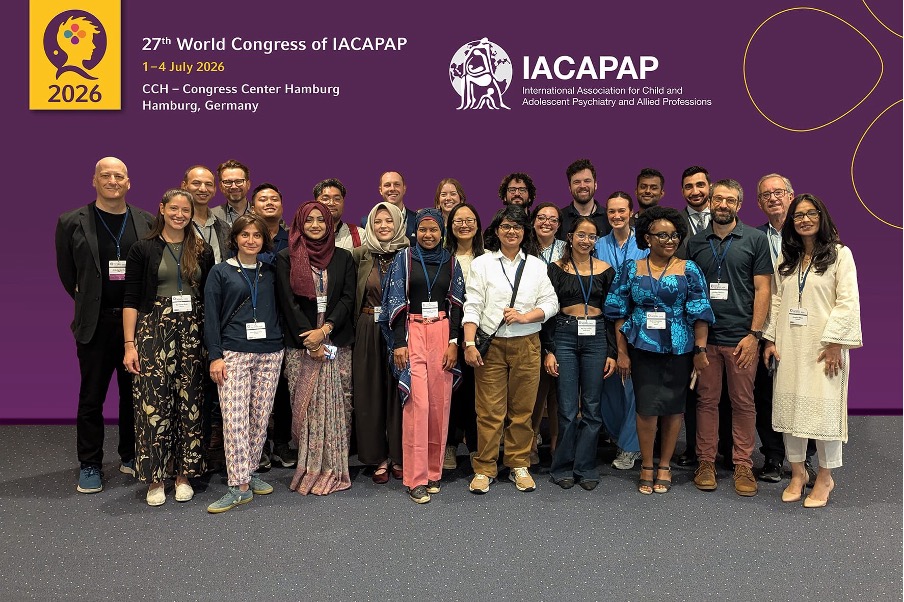
Figure 1. Fellows and mentors who participated on site in the Donald J. Cohen Fellowship 2026.
Docking in a Safe Harbour
Each fellow arrived in Hamburg carrying more than luggage. Some brought self-doubt, others were navigating personal or professional transitions, and many questioned the impact of their work in challenging contexts. As fellow Güler Yalcin (Türkiye) reflected:
"I think many of us arrived in Hamburg with questions. Questions about the Fellowship, about the people we would meet, about the kind of space we would enter, and perhaps also about our own place in the broader field of child and adolescent mental health. What was uncertain at first slowly became a harbour. Not a place where we remained still, but a place where we could anchor for a while, listen to one another, exchange stories, and begin to feel part of something larger than ourselves."
For Saba Nisa (Canada/Pakistan), the journey to the fellowship meant leaving her infant and family for the first time.
"As the plane crossed the Atlantic, excitement and maternal guilt travelled with me. I was pursuing an opportunity that could shape my academic and professional journey, but I was also leaving behind the people who mattered most to me. Then, when my flight was cancelled in Amsterdam, I spent the night on a six-hour bus journey to avoid missing the Congress. Looking back now, every challenge was worth it. The fellowship became a space for connection, mentorship, reflection, and belonging. Sometimes, a journey takes you across continents only to lead you to the people who make the world feel a little smaller, and the work of caring for children and adolescents feel a little less lonely."
One of the fellowship's greatest strengths was its ability to create a space where vulnerability was encouraged. This was reflected by many of this year's fellows.
"I was at a critical transitional period of my life and career, with a lot of self-doubt and self-defeat. I even had to postpone a professional assessment to attend the fellowship and battled anxiety throughout the decision. Yet once I met the coordinators, mentors, and fellows, everything changed. Their stories and authenticity reminded me that I was already on the right path. A central lesson for me was that vulnerability and strength can coexist, and that success is measured not by titles or awards but by the meaningfulness of what we do and the lives we touch." - Ruth Charlotte Entsuah (Ghana/Canada)
“I was deeply moved by the way the fellowship created room for both vulnerability and growth, allowing impostor syndrome to give way, little by little, to confidence and empowerment.” - Angelique Nicole Chetty (South Africa)
“The quote, “I am unique. I am vulnerable. I am capable.” reminded me to embrace growth with confidence” - Virak Nuth (Cambodia)
"I learned that I can be vulnerable and capable at the same time." - Konstantin Kopp (Austria)
In a field often characterized by expertise and authority, the willingness of both fellows and mentors to share their personal struggles and uncertainties fostered a culture of authenticity that encouraged everyone to participate, establishing a safe harbour.
Building Bridges Across Cultures and Continents
Beyond the harbour, Hamburg is often called the city of bridges, with more than 2,500 spanning its waterways. For many fellows, the city’s bridges also became a fitting metaphor for the connections formed throughout the week.
"Two years ago, a mentor asked me to describe my purpose in life using a metaphor. My answer was simple: I want to be a bridge. Throughout life we see how unequal access to education, healthcare, and opportunity can be. I wanted to help people move from a difficult life towards an easier one, even if I did not yet know how. Arriving in Hamburg, a city famous for its bridges, I found that metaphor reflected everywhere around me. I met people who were bridges between countries, cultures, ideas, and communities." - Nur Ihsanti Amalia (Indonesia)
The fellowship itself became a bridge between vastly different professional realities. Fellows came from settings with different resources, healthcare systems, cultures, and challenges, yet discovered common ground in their commitment to children and families. These differences enriched conversations and expanded perspectives.
As Marianna Ruiz (Costa Rica/Norway) reflected,"Across languages, disciplines, experiences, and ways of seeing the world, we practised a kind of transcultural thinking, not dissolving our differences but allowing them to deepen the conversation."
From Colleagues to Friends
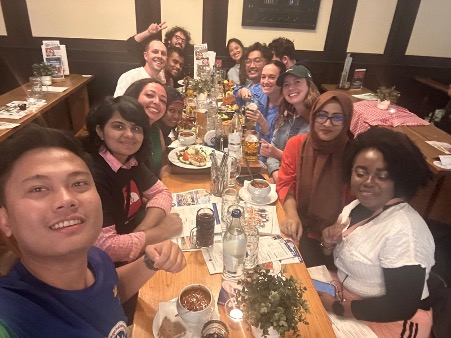
Figure 2: Fellows enjoying dinner and a World Cup match together, sharing a relaxed evening beyond the programme activities.
Perhaps the most unexpected outcome of the fellowship as we docked in the harbour and built bridges was the speed with which strangers became friends. Throughout the week, learning happened everywhere: in lecture halls, over breakfast tables, during evening walks, while cheering on football matches, and during conversations that stretched long after official sessions had ended. These informal moments became as important as the formal program. As a group of fellows, we reflected on how surprising this transformation felt.
“We found ourselves admitting our fears, sharing our hopes, and speaking candidly about personal challenges within days of meeting,” - Bianca Kann (Brazil)
“I found a wonderful group of friends. Despite being separated by geography and time zones, I believe the relationships we have built will be long-lasting, strengthened by our diversity, culture, values, and ultimately, our shared mission of improving the mental health and wellbeing of the next generation.” - Joemer Maravilla (Australia/Phillipines)
“It’s like a return to adolescence, with an experience that feels like summer camp in its intensity, its authenticity, and its extraordinary nature. Meeting each other, talking, getting along, getting to know one another. Meeting the mentors, connecting with previous generations, feeling part of a lineage spanning several generations, discovering a culture. I’m leaving with the feeling that I’ve changed, that I’m no longer the same person, and that I’m no longer a lone wolf.” - Théo Tarik Mouhoud (France)
As these reflections highlight, what began as a gathering of professionals from different backgrounds quickly evolved into a community.
Hope in a Challenging World
As we reflected on our experiences in Hamburg and our newfound community, one final theme emerged: hope. The fellowship taught us about vulnerability and built bridges across cultures and disciplines, but perhaps the most enduring outcome was a renewed sense of hope and inspiration for the future of child and adolescent mental health.
"The fellowship gave me authentic hope. Living in the United States, I have watched setbacks related to immigration, climate change, and inequity accumulate over many years. More than apathy, I often felt hopeless. Meeting people from around the world who continue to work tirelessly for change reminded me that we are not alone. We exchanged ideas, advice, and celebrated successes together. I left Hamburg knowing that I am part of a united, change-oriented community, and that knowledge gives me strength to face future challenges." - Erina Horikawa (US/Japan)
“We built friendships, broadened perspectives, and left with renewed hope. For me, that hope is grounded in knowing that I am now part of a community of fellows I can continue to learn from, collaborate with, and turn to for support long after the fellowship has ended.” - Erica Koopmans (Canada)
“Listening to colleagues and mentors from every corner of the world, I realised how much more there is to discover, not because I knew too little, but because this field is so rich, so diverse, and constantly evolving. Rather than feeling overwhelmed, I felt inspired. The experience reignited my curiosity and reminded me that learning never truly ends.” - Fatma Swilem (UK/Egypt)
Carrying the Journey Forward
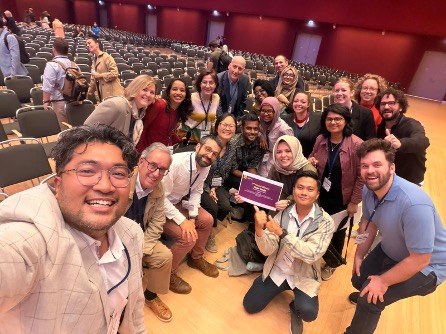
Figure 3: Past and present fellows and mentors coming together after the closing ceremony, celebrating achievements and the connections that carry the journey forward.
As the fellowship drew to a close, participants realized that Hamburg was not an endpoint but a beginning. The relationships formed during those few days created a foundation for future collaborations, friendships, and learning. Like ships leaving a harbour, each fellow returned home carrying new ideas, renewed confidence, and a deeper sense of belonging within a global community. Some of us returned to clinics, others to research programmes, advocacy initiatives, teaching roles, or policy work. Yet all carried the same truth, none of us works alone. The bridges built in Hamburg now stretch across continents and the conversations continue across time zones. As we look toward future congresses and future collaborations, we carry forward the enduring legacy of Donald J. Cohen and a belief that by nurturing emerging leaders, creating space for vulnerability, and supporting one another, we can build a better future for children, adolescents, and families everywhere. Hamburg was our harbour. The fellowship became our bridge. The journey continues.
This article represents the view of its author and does not necessarily represent the view of the IACAPAP's Bureau or Executive Committee.
