

Psychosomatic Aspects of Chronic Diseases in Children Experience from Uzbekistan
By: Maftuna Abdujalilova Shukhrat Kizi, PhD1
1 Associate Professor, Department of Children’s Diseases
Tashkent State Medical University, Uzbekistan
Introduction
In recent years, increasing attention has been given to the role of psychosomatic factors in the development and course of chronic diseases in children. Bronchial asthma, one of the most common chronic conditions in pediatric practice, is strongly influenced not only by biological mechanisms but also by psychological and emotional factors. In Uzbekistan, as in many other countries, the integration of mental health considerations into pediatric care remains an urgent and evolving field.
Current Situation in Uzbekistan
Pediatric healthcare in Uzbekistan has undergone significant improvements over the past decade. However, the psychosomatic dimension of chronic diseases is still under-recognized in routine clinical practice. Children with bronchial asthma frequently present with increased levels of anxiety, emotional instability, and stress-related triggers that may worsen disease control and increase the risk and frequency of exacerbations.
Clinical observations and local studies indicate that psychosocial stressors, including family environment, school-related pressures, and post-infectious conditions such as COVID-19, can significantly affect the course of asthma. Despite this, structured psychosomatic assessment is not yet widely implemented in standard pediatric protocols.
Educational and Clinical Approaches
Efforts are being made to improve awareness among healthcare professionals regarding the importance of psychosomatic factors. In medical education, modern teaching methods such as problem-based learning, case-based discussions, and simulation-based training are increasingly used to promote clinical reasoning and holistic patient care.
In clinical settings, there is a growing emphasis on multidisciplinary approaches, involving pediatricians, psychologists, and, when necessary, psychiatrists. However, access to specialized mental health services for children remains limited, especially in regional areas.
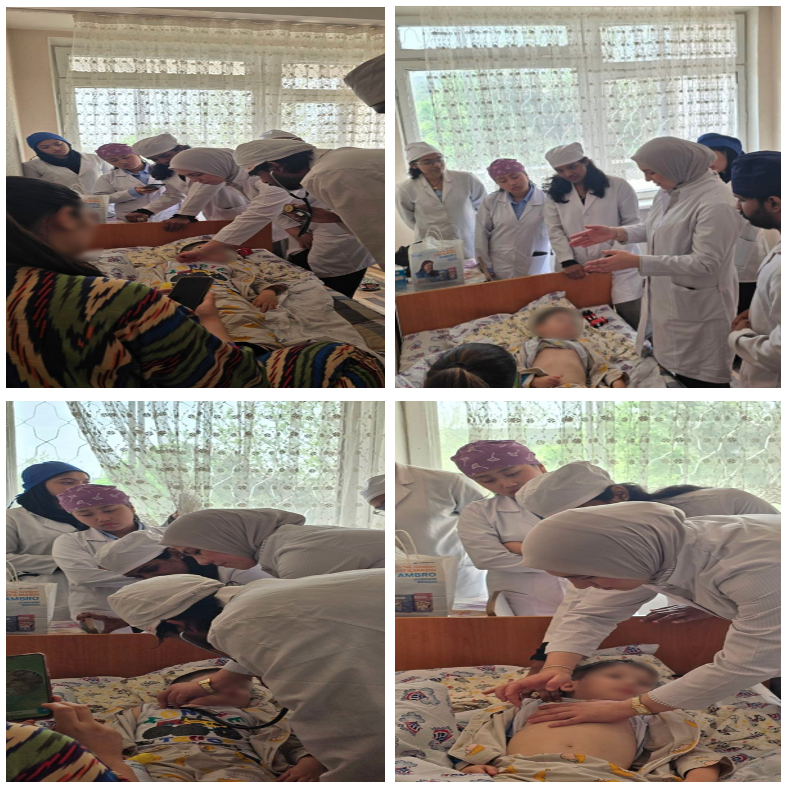
Figure 1. Clinical examination of children conducted by the author together with students. Students are introduced to patient communication, techniques of palpation and auscultation of the lungs and cardiovascular system in children, and the importance of a patient-centered approach. The importance of doctor-child interaction in clinical practice, emotional interaction and psychosomatic factors influencing child health are also discussed.
Photo: Author’s own image
Challenges and Future Directions
One of the main challenges is the lack of standardized tools for early identification of psychosomatic disturbances in children with chronic diseases. Additionally, there is a need for training programs focused on the integration of mental health into pediatric care.
Future strategies should include the development of screening protocols, incorporation of psychosomatic assessment into routine pediatric practice, and strengthening collaboration between medical and mental health professionals. Research in the field of immunogenetics and its interaction with psychosomatic factors may also provide new insights into personalized approaches to treatment.
Conclusion
The integration of psychosomatic aspects into pediatric care is essential for improving outcomes in children with chronic diseases such as bronchial asthma. The experience from Uzbekistan highlights both encouraging progress and important gaps that still need to be addressed. Strengthening interdisciplinary collaboration and enhancing medical education will be key steps toward more comprehensive child healthcare.
Conflict of Interest Disclosure
The author declares no conflict of interest.
This article represents the view of its author(s) and does not necessarily represent the view of the IACAPAP's bureau or executive committee.
