

Noise Pollution and CAMH: Insights from Dhaka, Bangladesh
By: Sifat E Syed, Assistant Professor of Child Psychiatry at Bangladesh Medical University (BMU)
Dhaka, the vibrant heart of Bangladesh, is alive with sound. While this energy reflects the pace of a busy metropolis, this noise pollution is also a threat to public health. In 2022, the United Nations Environment Program (UNEP) report identified the ten noisiest cities worldwide and Dhaka was on top with a staggering noise level of 119 dB among 61 countries1.
Unlike other pollutants, noise is often overlooked because it leaves no visible trace. But its effects accumulate quietly in the brain and body. Researchers and mental health professionals have raised growing concern that chronic noise exposure is not just an irritant — it is a significant environmental stressor, especially for children and adolescents whose minds are still developing2.
The growing problem of urban noise
According to the Noise Pollution (Control) Rules 2006, Bangladesh, allowable noise level is 55 decibels (dB) in residential areas and 75 dB in industrial zones during the day. But recent research report says, all parts of Dhaka exceeds the permissible limits3 posing significant health risks to the citizens.
Impact of noise on health:
Noise pollution affect both human and wildlife health. Persistent noise can cause hearing loss, sleep disturbance and triggers the release of stress hormones thereby increasing the risk of hypertension, cardiac disease, and stroke4.
How noise affects the mental health of children:
Excessive noise interferes with brain functions essential for learning, attention, and emotional control. Research from global and regional studies provides alarming insights.
Continuous background noise impairs cognitive functions, language and speech development in children specially speech perception, listening comprehension also reading, writing and memory5. Traffic noise during nighttime can cause sleep disturbance in children leading to fatigue, irritability, and lack of concentration6. Anxiety, restlessness and irritability are common among children from noisy neighborhoods2.
A neglected public health concern in Bangladesh
The World Health Organization (WHO) has identified environmental noise as the second largest environmental health risk in Europe after air pollution — a ranking that likely applies to South Asian megacities as well. Yet, in Bangladesh, noise is still often perceived as a “nuisance” rather than a public health issue.
In Dhaka, uninterrupted quiet time is becoming rare as many residential areas and schools are adjacent to highways, markets, or construction zones. This constant overstimulation may hinder children’s ability to focus and regulate emotions. Emerging studies from Dhaka are beginning to link environmental noise with health problems in adults such as deafness, insomnia, headache, heartburn, high blood pressure, fatigue etc7. Pediatricians and child psychiatrists in Dhaka have noted that children living in traffic-heavy areas often report poor concentration, disturbed sleep, and emotional instability. However, no study in Bangladesh has specifically explored the effects of noise exposure on children’s psychological functions yet.
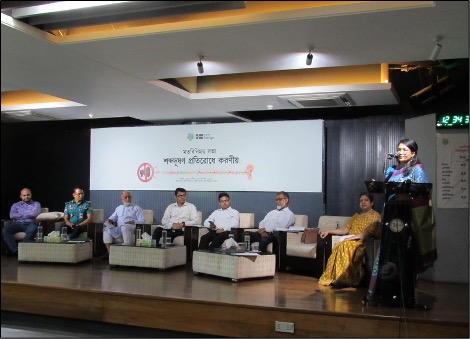
Figure 1: Panel discussion on ‘Actions to prevent noise pollution’ in Dhaka organized by BELA (Bangladesh Environmental Lawyer’s Association)
What Can Be Done?
Reducing noise pollution requires both structural and behavioral change. Enforcing existing noise control laws and restriction of unnecessary honking, loudspeakers, and night-time construction can minimize the harmful effects. Encouraging “quiet time” or mindfulness activities can help students relax. Raising awareness in community about health impacts of noise can bring some changes.
Organizing campaigns, meetings and seminars involving stake holders are proved to be useful. Bangladesh Environmental Lawyer’s Association (BELA) has recently organized a panel discussion on 17 September, 2025 on ‘Actions to prevent noise pollution’ in Dhaka. Physicians, psychiatrists, students, representatives from the police force, vehicle owners association, urban planners, environmentalists took part in the robust discussion. Key points highlighted in the meeting included that despite existing laws, weak enforcement remains a major obstacle to effective control. Participants agreed that preventing noise pollution requires more than laws alone — it demands effective enforcement, source control, and collective social awareness such as regulation of hydraulic horn use, designation of “silent zones", training for drivers and transport workers.
As Bangladesh strides toward urban modernization, recognizing noise as a public health issue is crucial. A city that values quietness will nurture calmer minds, healthier families, and more attentive learners. The challenge ahead is not just to reduce the decibels, but to restore balance — creating environments where children and adolescents can think, sleep, and grow without the constant roar of a restless city.
--------------
1Aletta F. Frontiers 2022: Noise, Blazes and Mismatches–Emerging Issues of Environmental Concern.
2Newbury JB, Heron J, Kirkbride JB, Fisher HL, Bakolis I, Boyd A, Thomas R, Zammit S. Air and noise pollution exposure in early life and mental health from adolescence to young adulthood. JAMA Network Open. 2024 May 1;7(5):e2412169-.
3Quader MA, Rahman MM, Chisty MA, Saeed Al Hattawi K, Alam E, Islam MK. Evaluation of noise pollution impact on health in Dhaka city, Bangladesh. Frontiers in Public Health. 2024 Nov 15;12:1477684.
4Basner M, Babisch W, Davis A, Brink M, Clark C, Janssen S, Stansfeld S. Auditory and non-auditory effects of noise on health. The lancet. 2014 Apr 12;383(9925):1325-32.
5Klatte M, Bergström K, Lachmann T. Does noise affect learning? A short review on noise effects on cognitive performance in children. Frontiers in psychology. 2013 Aug 30;4:578.
6Skrzypek M, Kowalska M, Czech EM, Niewiadomska E, Zejda JE. Impact of road traffic noise on sleep disturbances and attention disorders amongst school children living in Upper Silesian Industrial Zone, Poland. International journal of occupational medicine and environmental health. 2017 Mar 23;30(3):511-20.
7Rahman MM, Tasnim F, Quader MA, Bhuiyan MN, Sakib MS, Tabassum R, Shobuj IA, Hasan L, Chisty MA, Rahman F, Alam E. Perceived noise pollution and self-reported health status among adult population of Bangladesh. International journal of environmental research and public health. 2022 Feb 19;19(4):2394.
--------------
This article represents the view of its author(s) and does not necessarily represent the view of the IACAPAP's bureau or executive committee.
