

Life with ADHD – Understanding Symptoms to Support Lifelong Growth
By: Anette Bakkane, Norway, MD, PhD in Geriatric Psychiatry · Writer, Educator, and Patient
Turning Diagnosis into Dialogue
Attention-Deficit/Hyperactivity Disorder (ADHD) is more visible than ever – in the media, in clinics, and in the conversations people finally dare to have.
Yet for many, it still feels like a lonely storm to stand in.
I had been a medical doctor for ten years when I finally recognised the symptoms, asked for, and received my own diagnosis. What followed were several lifechanging moments that marked the beginning of a new story – both personal and professional.
The Life with ADHD series grew from a deep dive into academic literature combined with lived experience: four illustrated books exploring ADHD across the lifespan.
Across the Lifespan – and Beneath the Surface
The series includes:
Life with ADHD – Childhood
Explores early signs, their impact on the child and their surroundings, and everyday life in school, leisure activities, and family systems. The book is written for an adult audience – for those who long to understand the child they were, or the child they care for.
Life with ADHD – Adolescence
A story of identity, vulnerability, and resilience. This volume addresses topics often overlooked or misunderstood in ADHD literature: medication and medical follow-up, substance use, and sexuality.
Life with ADHD – Adulthood
Focuses on work, relationships, parenthood, and burnout. It examines how ADHD and exhaustion intertwine, and how misdiagnosis can delay meaningful support.
Life with ADHD – Elderhood
Draws on clinical and academic knowledge of ageing and geriatric psychiatry. It addresses functional decline and suicide among older adults – areas rarely discussed but urgently relevant.
Together, the four books follow a human journey through change, loss, adaptation, and hope.
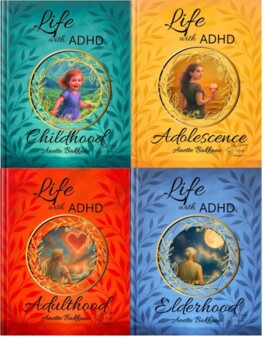
Figure 1: Life with ADHD – Series Covers - A visual overview of the four-part illustrated series following ADHD from childhood through adolescence, adulthood, and elderhood.
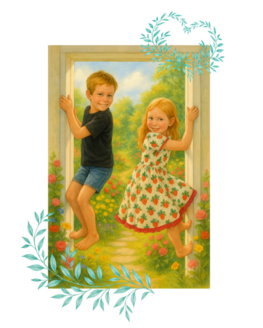
Figure 2: Relational Beginnings -Symbolising early play, connection, and the developing self – from Life with ADHD - Childhood.
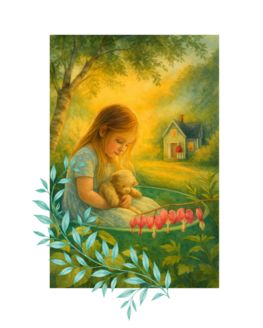
Figure 3: The Inner World of Childhood - A representation of security, imagination, and the emotional landscape of early experience – from Life with ADHD - Childhood.

Figure 4: Identity in Formation -Reflection, self-expression, and meaning-making during adolescence – from Life with ADHD - Adolescence.
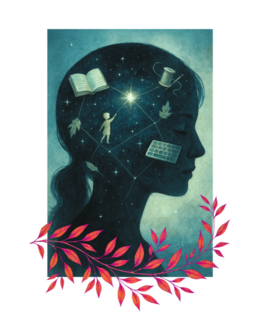
Figure 5: Inner Constellations -A metaphor for cognition, sensory perception, and creative thought – from Life with ADHD - Adulthood.
Understanding as the Key to Coping – Without Burning Out
Across the entire series, one message remains constant: understanding is the key to improvement.
In some cases, what appears as comorbidity – anxiety, depression, or chronic fatigue – may reflect the long-term strain of living with unrecognised ADHD. When the core symptoms of ADHD are recognised instead of masked or misinterpreted, many secondary difficulties can lessen or even resolve.
Early recognition and accurate understanding can prevent years of unnecessary suffering.
But knowledge alone is not enough. It must be shared, felt, and lived – transforming diagnosis into dialogue.
The Hidden Emotion: ADHD Grief
More professionals are beginning to address what many experience but rarely name: ADHD grief – the mourning of years lost to adaptation.
For many adults, receiving a diagnosis brings not only clarity but also sorrow for what could have been different.
By naming this grief as a natural response, we create space for acceptance and self-compassion.
Writing for Connection
Each book combines professional insight with lived experience. ADHD diversity makes every person unique – and we cannot support what we do not understand. Research is the project’s core; simplification is the wrapping.
Written in clear, reflective language and accompanied by symbolic illustrations, the series portrays the emotional and sensory landscape of ADHD – the chaos and the beauty.
The illustrations, created in collaboration with Erik S. Landsem and Kåre Ivar (ChatGPT), visualise emotion and perception in ways that words alone cannot. The series aims to support dialogue in clinical, educational, and family contexts by portraying both the challenges and the strengths within ADHD.
The series is intended for individuals with ADHD, their families, professionals in education and mental health, and anyone interested in how attention shapes human life. The books are concise and richly illustrated, meeting readers where they are – whether new to the field or deeply familiar. They are currently available in digital format, with print editions forthcoming.
A Message for Professionals
Child and adolescent mental health relies not only on treatment, but also on communication, inclusion, and respect.
Life with ADHD reflects an effort to bridge the gap between knowledge and empathy – encouraging professionals to look beyond symptoms and see the person beneath.
To receive help and reach their potential, patients must first be seen – and understood – as human.
Short Abstract
Anette Bakkane (Norway) is an MD with a PhD in geriatric psychiatry, author, and educator, with broad clinical and academic experience. Life with ADHD is a four-part illustrated series examining ADHD across childhood, adolescence, adulthood, and elderhood. Integrating research and lived experience, the series highlights the importance of recognising core symptoms and supporting dialogue across clinical, educational, and family contexts.
This article represents the view of its author(s) and does not necessarily represent the view of the IACAPAP's bureau or executive committee.
