

From Mathematics to Global Psychiatry: The Journey of Professor Bruno Falissard
By: Dr Lakshmi Sravanti, Deputy Bulletin Editor of IACAPAP, Assistant Professor in the Department of Child and Adolescent Psychiatry, National Institute of Mental Health and Neurosciences (NIMHANS), India.
Professor Bruno Falissard, past president of the International Association for Child and Adolescent Psychiatry and Allied Professions (IACAPAP) from 2016 to 2018, offers a fascinating perspective on child and adolescent psychiatry, weaving together clinical passion, public health, and global collaboration. His journey demonstrates how curiosity, adaptability, and vision can transform both a career and an international field.
To watch the full interview, visit: https://youtu.be/fs-yu4ghiMc
Figure 1: Interview with IACAPAP Past Presidents (4)
A Path Less Expected: From Numbers to Children
Professor Falissard did not begin his career intending to become a physician. He first trained in mathematics before questioning whether that path aligned with his deeper aspirations. At 25, he made the decision to leave mathematics and begin medical training, noting that he was “a little bit old” at the time.
His eventual encounter with child and adolescent psychiatry during residency proved transformative. He discovered a deep interest in working with children. The relational and playful dimension of child psychiatry resonated deeply with him, shaping the clinical passion that continues to inform his work. This early turning point laid the foundation for a career that would blend clinical care with research and global engagement.
Integrating Public Health and Psychiatry
With training in mathematics and a PhD in biostatistics, Professor Falissard combined academic public health with clinical work in child and adolescent psychiatry. This dual role shaped his broader perspective on the field. As he explained, public health became important for IACAPAP because of “global health” and “the different type of practice according to the continent...” For him, child psychiatry could not be separated from epidemiology, systems of care, and global disparities. This intersection of clinical practice and population-level thinking gradually deepened his involvement in IACAPAP, ultimately leading to his presidency.
The Digital Turning Point
One of the defining shifts during his involvement with IACAPAP was the expansion of digital communication. He recalls the earlier challenges of coordinating an international association in an era when collaboration required travel or lengthy telephone exchanges. The rise of the internet — and later platforms such as Zoom — significantly changed this landscape, making global meetings more feasible and enabling broader sharing of knowledge.
This transformation supported initiatives such as the IACAPAP e-textbook and the development of a massive open online course (MOOC) in child and adolescent psychiatry. The MOOC revealed the breadth of global engagement with child and adolescent psychiatry. Participation extended beyond psychiatrists to nurses, parents, and grandparents. For IACAPAP, making high-quality educational resources freely accessible represented what he described as “a real breakthrough.”
Mental Health, Psychiatry, and Inequality
During his presidency, he reflected critically on the growing emphasis on “mental health.” While welcoming wider recognition of psychological wellbeing, he cautioned that severe psychiatric conditions must not be overlooked. “Some children do suffer a lot, and this is not only a question of mental health. This is a question of care, of psychiatry.”
Inequality, he stressed, remains a central global challenge. Care must be adapted to context — “you have to adapt treatment and care to local resource.” Evidence developed in one setting cannot simply be transferred to another without thoughtful implementation. Psychiatric care, in his view, is inseparable from family and social environments, requiring attention not only to individuals but to the systems surrounding them.
Leadership as Learning
Serving as IACAPAP president brought both symbolic responsibility and personal growth. Representing child and adolescent psychiatry globally required navigating cultural differences and diverse professional traditions. Through international dialogue, he encountered perspectives that broadened his understanding of care. In particular, conversations with colleagues from Asia highlighted dimensions — such as spirituality — that are sometimes less emphasized in Western frameworks. These exchanges reinforced the importance of humility and openness in global collaboration.
Watch the Full Interview
Professor Bruno Falissard’s reflections underscore the power of passion, adaptability, technology, advocacy, and global collaboration in shaping child and adolescent psychiatry. His journey offers both inspiration and guidance for the next generation of mental health professionals navigating an increasingly interconnected world. To explore the complete conversation and her insights in full, view the interview here:
👉 Access the full interview here: https://youtu.be/fs-yu4ghiMc
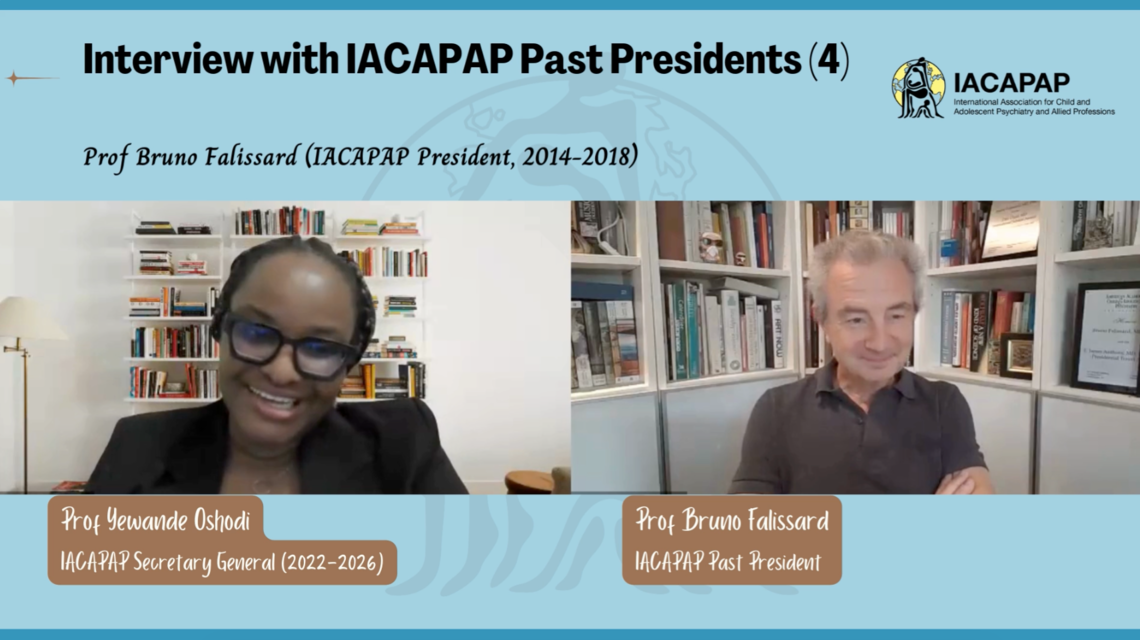
Figure 2: Prof Yewande Oshodi in conversation with Prof Bruno Falissard
