

From Lamentation to Action: Lessons from the World Health Summit Regional Meeting 2026 in Nairobi
By: Charlene Gumbo1
1Consultant Psychiatrist, Chiromo Hospital Group, Nairobi, Kenya
Day 1: A Shifting Narrative
The opening of the World Health Summit Regional Meeting (WHSRM) - 2026 hosted at the United Nations Office in Nairobi, was a declaration of intent under the theme:, “Reimagining Africa’s Health Systems: Innovation, Integration, and Interdependence”. The gathering convened over 3,000 policymakers, researchers, and innovators from more than 80 countries.
Global and regional leaders were in attendance. A defining moment during the opening ceremony was when His Excellency William Ruto, President of Kenya, declared: “Africa is no longer a passive participant in global health; we are an active force shaping its future.” Professor Lukoye Atwoli, the President of WHSRM 2026, grounded the urgency of this moment in equally clear terms: “This summit must move beyond Africa identifying challenges to making commitments, ensuring accountability, and measuring real progress”. He stressed that this meeting must be different from past gatherings; not a forum for lamentation, but a platform for commitments and accountability for action.
On day one, the session on “Trauma, Displacement, and Crisis Response: African Lessons for Global Mental Health” was a standout. Chaired by Dr. Frank Njenga and co-hosted by Aga Khan University, Chiromo Hospital Group, and the World Health Organization, the session brought together a powerful panel and the key takeaway was: Africa’s lived experience is not merely informing global practice but actively shaping it. Mental health must be embedded within humanitarian and emergency systems; and strong, multisectoral partnerships are critical for sustainable impact.
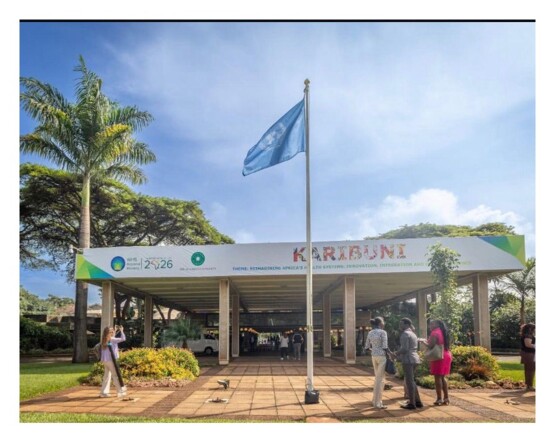
Figure 1: World Health Summit Regional Meeting 2026 at United Nations Office Nairobi
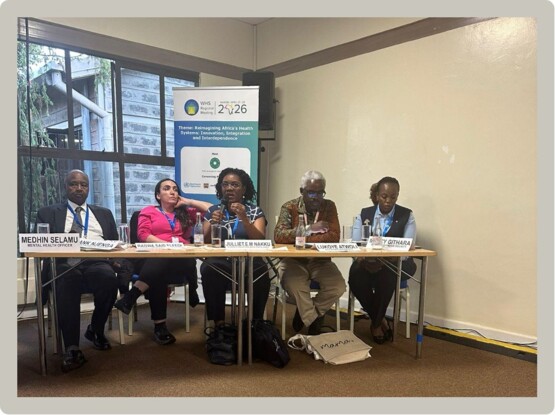
Figure 2: Panel for session on "Trauma, Displacement, and Crisis Response" at WHSRM 2026: Dr. Frank Njenga (chair), Dr. Radwa Said Elfeqi, Dr. Juliet Nakku, Mercy Githara, and Medhin Selamu
Day 2: Youth Voices and Breaking Barriers
On Day 2 the focus shifted to systems change and the role of young people in shaping their own futures. In the session on “Youth and Adolescent Mental Health: Building Psychosocial Resilience and Leadership,” I had the privilege of speaking as a panelist.
The Blueprint: Start local; build trust through community, language, and culturally grounded care; then validate and integrate these models into health systems, ensuring youth are not just beneficiaries but co-creators of their own care.
Key tension: How do we scale community-led innovations without losing their authenticity? And how do we ensure safety and clinical quality while remaining accessible to the most marginalized?
From a clinical lens, we must bridge community and digital mental health with specialized psychiatric care, creating seamless referral pathways. We challenged the system: Why are community-led innovations still treated as “pilots” rather than integral to health systems? What will unlock sustainable financing for youth mental health across Africa, including data on youth suicidality? And how do we ensure youth are leaders, not just beneficiaries?
Equally powerful was the session on “Mental Health, Psychosocial Support, and Well-being: Breaking Barriers through Multisectoral and Integrated Approaches,” chaired by Mary Bitta, PhD, alongside an inspiring panel including Dr. Francisca Ongecha. The discussion reinforced that tackling stigma and advancing mental health requires coordinated, cross-sector action grounded in real-world collaboration.
The energy was palpable on day 2; strong, engaged youth presence asking the right questions. The takeaway from this day was: Africa does not lack innovation in youth mental health - we need to trust it, fund it, and scale it.
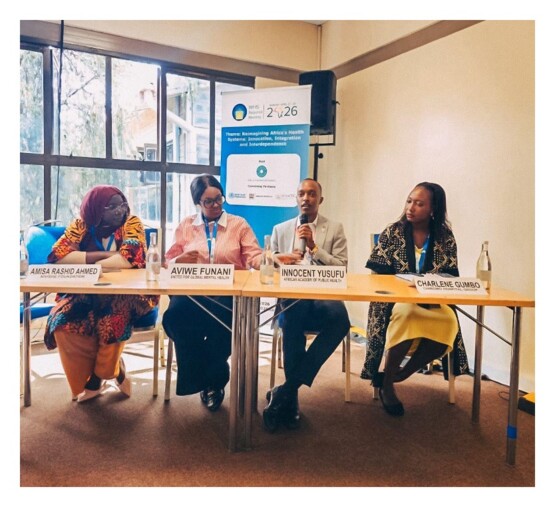
Figure 3: Panelists at the WHSRM 2026 session on youth and adolescent mental health. “Youth and Adolescent Mental Health: Building Psychosocial Resilience and Leadership,” including Charlene Gumbo, Amisa Rashid, Aviwe Funani, and Dr. Innocent Yusuf.
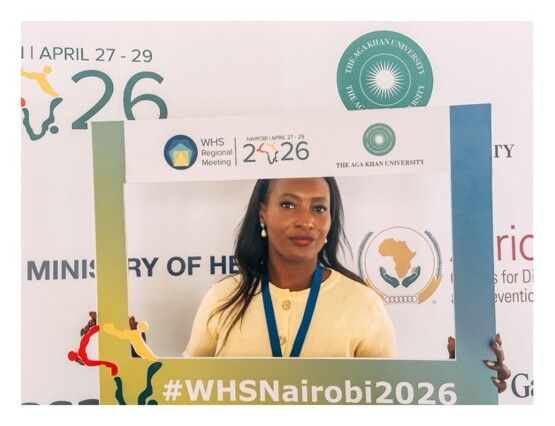
Figure 4: Dr. Charlene Gumbo, author of this article, at the World Health Summit Regional Meeting 2026 in Nairobi.
Day 3: Closing with Accountable Ambition
The final day of WHSRM 2026 brought a sobering reality check. Across dozens of sessions, one recurring truth emerged: Africa has the knowledge, and increasingly the solutions, but not yet the financing, systems, or political will to match.
On health financing, the numbers were stark: Africa carries 22% of the global disease burden but contributes just 1% of global health expenditure. External support is shrinking, debt rising, climate risks accelerating. The Africa CDC Ministerial Dialogue was clear: domestic resources, institutional ownership, and debt-for-health swaps are necessary. Sovereignty is built, not declared.
On manufacturing: Africa cannot negotiate health sovereignty while remaining dependent on external supply chains. The conversations on regional vaccine manufacturing and supply chain resilience were timely reminders that industrial capacity is imperative.
On women’s health, the launch of the WHO-Aga Khan University Collaborative Initiative on Breast and Cervical Cancer was a moment worth marking. This new partnership combining research expertise, policy leadership, and community engagement was celebrated as a model regional approach to women’s cancers; combining global science with African leadership to advance health equity for girls and women.
And on mental health, the message was unequivocal: mental health is the SDG blind spot - the target Africa is most consistently failing to meet. As Dr. Linnet Ongeri-Kioi noted, mental health is not a soft issue. It is a financing, systems, and equity issue. Every conversation about UHC, climate resilience, and women’s health that excludes mental health is incomplete.
The summit closed with remarks from His Excellency, Kithure Kindiki, the Deputy President of Kenya and Professor Lukoye Atwoli, expressing gratitude to organizers, partners, and participants. The closing affirmed Nairobi’s emergence as a credible host for global health diplomacy and called for sustained follow-through on the commitments made.
Moving Forward
I leave WHSRM 2026 with a clearer sense of what accountable ambition looks like and a sharper responsibility to keep pushing for mental health to be at the center of Africa’s health agenda, not at its margins. For child and adolescent mental health professionals worldwide, the call to action is clear: we must move from dialogue to implementation, embedding youth-centered care within broader health systems, and ensuring that young people are not just the subject of our research but the leaders of our solutions.
This article represents the view of its author and does not necessarily represent the view of the IACAPAP's Bureau or Executive Committee.
