

Fostering Collaboration and Growth: A Mentor–Mentee Journey through the IACAPAP’s Early Career Group program
By: Dilara Ozdemir, MD, Department of Child and Adolescent Psychiatry, Abant Izzet Baysal University Medical Faculty, Bolu, Turkey
Dejan Stevanovic, MD, PhD, Senior research fellow, Clinic for Neurology and Psychiatry for Children and Youth, Belgrade, Serbia
Launched in 2022, the IACAPAP’s Early Career Group (ECG) was created with an idea to strengthen the professional development of early-career clinicians and researchers in child and adolescent mental health (CAMH). The program fosters international networking, mentorship, and collaboration, enabling active participation in the global CAMH community. It is aimed at offering a supportive environment for the exchange of ideas and the development of partnerships across countries, cultures, and professional stages. Trainees, recent graduates, and students can connect with mentors who are committed to improving the mental health and wellbeing of children and adolescents.
As current participants, we have experienced how inspiring and empowering it is to be part of this international endeavor.
A Mentee’s Perspective
If you know Istanbul, you’ll remember how this magical city stands at the crossroads of two continents. Where ancient Asian traditions meet Europe’s modern spirit, a unique harmony emerges. I feel that same fusion every day in my clinical work. In my third year of child and adolescent psychiatry (CAP) residency, I spent my days caring for patients in my local community and my evenings engaging with experts worldwide through webinars and trainings. Like the city itself, I stood with one foot firmly rooted in my cultural context and the other stepping into global innovation.
When I received the Donald Cohen Fellowship (DCF) in 2024, what I felt most deeply was a sense of professional embrace. It gave me the confidence to let go of my lingering insecurities and step onto the global stage with purpose. Soon after, a pivotal match arrived—one that I immediately sensed would shape my career. I was a traveler with a head full of ideas but without a clear map; the ECG offered me a guide who not only knew the paths but was genuinely eager to walk them with me: Dr. Stevanović, my mentor on this journey. Within the first five minutes of our first meeting, any perception of being a mere “guest” in the global arena faded. I felt seen, valued, and welcomed—as a colleague among colleagues.
Through our early discussions, my curiosity evolved into a shared scientific purpose—one rooted in both my clinical observations and the broader needs of Turkish youth. In my practice, I repeatedly observed how pervasive and functionally impairing irritability is across diverse diagnostic categories. Yet culturally appropriate assessment tools—especially those capable of capturing both tonic and phasic irritability—remained scarce. Together, we identified this gap as a significant clinical and research priority.
For our ECG collaboration, we have developed a small project aiming to more precisely characterize the multidimensional nature of irritability in youth. The study is intended to evaluate children and adolescents aged 8–17 in a transdiagnostic manner (i.e., ADHD, anxiety disorders, and mood disorders) samples in several places in Türkiye. All participants will undergo structured clinical interviews to accurately determine the clinical significance of their irritability and complete several self- and parent-rated psychopathology scales. Foremost, we plan to adapt two innovative instruments into Turkish: the Irritability and Dysregulation of Emotion Scale (TIDES-13), which measures proneness to anger, negative emotional reactivity, frustration intolerance, and the frequency and severity of outbursts; and the Emotional Outburst Inventory (EMO-I), a parent-interview tool focused on behavioral expressions of irritability within the irritability–anger–aggression continuum. This process represents far more than a routine scale adaptation. By integrating my frontline clinical insights with Dr. Stevanović’s extensive global research experience, we have developed a methodology that we believe will meaningfully advance both clinical practice in Türkiye and the international understanding of irritability in youth. We look forward to presenting the initial findings at the 27th IACAPAP World Congress in 2026, in Hamburg.
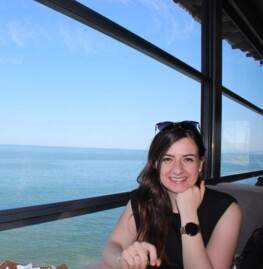
Figure 1: Mentee – Dr Dilara Ozdemir
A Mentor’s Perspective
In 2009, I was also awarded the DCF while training in CAP, which was marked a turning point in my career. Although I had some research experience prior, the fellowship allowed me to engage more deeply in CAMH research and taught me how transformative networking can be for both personal and international career development. Since then, participating in consortia such as the International Child Mental Health – Study Group (ICMH-SG), the Autism Spectrum Disorder International Consortium (ASDIC), and more recently the ECNP Child and Adolescent Neuropsychopharmacology Network and Cross-Cultural Consortium on Irritability (C3I) has provided me with invaluable experience. These initiatives have not only helped me build international networks but also deepened my understanding of the evolving needs, preferences, and perspectives of young people. These insights are directly relevant to the ECG, where fostering mentorship, collaboration, and peer connections is central. I believe my experience navigating diverse international initiatives and engaging with emerging CAMH leaders can help ECG’s members fully benefit from networking, mentorship, and professional growth within the global CAMH community.
Being engaged in the ECG as a mentor has given me the opportunity to fully apply and operationalize my knowledge and experience in networking, collaboration, and research development, which I think is necessary for my future colleges who will mentor for the ECG. Working closely with an early-career colleague who combines curiosity and hard work with an instinctive understanding of what needs to be done, we were able to develop the study mentioned above, transforming initial ideas into a structured, timely, and relevant research project. Throughout this process, we held a series of online meetings to brainstorm, refine concepts, and ensure that the study would be both meaningful locally and significant in an international context. On a personal level, Dilara has taught me to be more patient and supportive with younger colleagues.
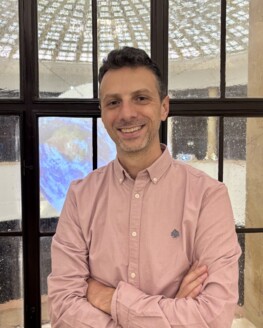
Figure 2: Mentor – Dr Dejan Stevanovic
Concluding Reflections
Our journey through the ECG highlights the power of global collaboration grounded in local clinical needs. By uniting diverse perspectives and experiences, mentorship becomes more than guidance—it becomes a shared pathway to advancing CAMH worldwide. For us, the ECG fostered a dynamic mentor–mentee partnership that extended beyond a single project, creating space for professional growth, knowledge exchange, and meaningful networking.
From an international perspective, we worked together to identify key figures and local opportunities to strengthen our work and develop a study which is relevant and timely. This experience has shown that success depends not only on insightful mentorship but also on the active engagement of early-career colleagues who are inquisitive, diligent, and able to intuitively navigate challenges.
As we continue our study and prepare to share its findings internationally, we are reminded that lasting advances in CAMH are built on connection: connections that empower early-career professionals, expand global knowledge, and ultimately improve the lives of young people. We are excited to see how the foundations laid through the ECG will help shape the future we are striving to create together and believe that will inspire more of our colleagues worldwide to join this program.
This article represents the view of its author(s) and does not necessarily represent the view of the IACAPAP's bureau or executive committee.
