

Building Global Leadership Skills in Early Career Child and Adolescent Psychiatrists: A Personal Journey Across Systems
By: Dr Fatma Swilem1
1 Senior Clinical Fellow in Child and Adolescent Psychiatry, Cambridge and Peterborough NHS Foundation Trust, UK
Communications Coordinator, WPA Early Career Psychiatrists Section
As an Egyptian-trained psychiatrist now working in Child and Adolescent Mental Health Services (CAMHS) in the United Kingdom, my understanding of leadership has been shaped not by titles, but by transitions—across systems, cultures, and ways of thinking about care.
Early in my career, leadership felt distant—something associated with seniority or formal positions. However, through clinical work, multidisciplinary collaboration and international engagement, I began to realize that leadership in child and adolescent mental health is something we practice daily, often without naming it.
A defining moment in this journey was attending the International Course on Leadership and Professional Skills for Early Career Psychiatrists in Zagreb, Croatia, in 2025. Standing alongside colleagues from different parts of the world, I was struck by both the diversity and similarity of our experiences. Despite differences in healthcare systems, resources, and cultural contexts, we were all facing common challenges: increasing demand, fragmented care pathways, workforce pressures, and the growing complexity of young people’s mental health needs.
What differed was not the challenges—but how we navigated them.
In some systems, leadership meant advocating basic access to care. In others, it involved coordinating highly specialized services across multiple agencies. In my own experience working within UK CAMHS, leadership often sits at the interface—between psychiatry, pediatrics, education and families. It involves creating shared understanding, aligning perspectives, and holding complexity rather than trying to simplify it.
Through these experiences, I came to understand that leadership in our field is less about authority and more about connection.
My role as Communications Coordinator for the World Psychiatric Association Early Career Psychiatrists Section further deepened this perspective. Working across international networks, I have seen how powerful it is to create spaces where early career psychiatrists can connect, share ideas, and feel represented. Leadership, in this context, becomes the act of opening doors—facilitating collaboration, amplifying voices, and ensuring that opportunities are accessible across different regions and backgrounds.
One of the most important lessons I have learned is that leadership development should not be postponed until later in our careers. Early career psychiatrists are already leading—whether through teaching medical students, contributing to multidisciplinary discussions, developing quality improvement projects, or supporting colleagues. Recognizing these everyday acts of leadership is essential for building confidence and professional identity.
In my current role, I have had the opportunity to translate these lessons into practice. This includes leading service development initiatives, contributing to multidisciplinary digital innovation projects, and supporting training and education within CAMHS. What has been particularly striking is how international learning directly informs local practice. Concepts such as psychological safety, shared leadership, and systems thinking are not abstract; they shape how we run meetings, support teams, and deliver care.
Alongside my local CAMHS leadership work, serving as a Leadership and Management Committee Representative within the Royal College of Psychiatrists’ Eastern Division has further expanded my understanding of professional leadership at a regional and national level. This role has highlighted how leadership in child and adolescent psychiatry extends beyond individual services into workforce development, policy discussions, educational priorities, and the shaping of professional culture. It has also strengthened my appreciation of how regional leadership structures can create meaningful opportunities for early career psychiatrists to contribute to wider system change.
Another key insight has been the importance of relational leadership. Some of the most impactful leadership moments do not come from directing others, but from listening, creating space, and supporting team members to contribute meaningfully. In child and adolescent psychiatry, where care is inherently multidisciplinary, this relational approach is essential.
At the same time, I have come to appreciate the role of followership. Learning from senior colleagues who model reflective and compassionate leadership has been invaluable. Equally, early career psychiatrists bring fresh perspectives, digital fluency, and adaptability—qualities that are increasingly important in modern healthcare systems. Leadership, therefore, is not hierarchical, but dynamic and shared.
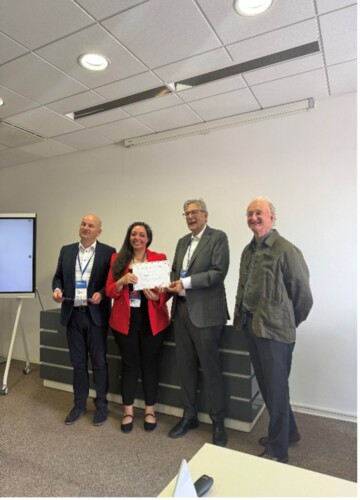
Figure 1: Participation in the International Course on Leadership and Professional Skills for Early Career Psychiatrists, Zagreb, Croatia (2025). The course brought together early career psychiatrists from diverse countries to develop leadership, collaboration, and professional skills in child and adolescent mental health. (Photo courtesy of Dr Fatma Swilem)
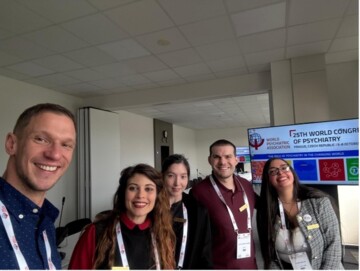
Figure 2: Networking and peer collaboration during the 25th World Congress of Psychiatry, Prague, Czech Republic, highlighting the importance of international professional communities in fostering leadership, mentorship, and shared learning among early career psychiatrists. (Photo courtesy of Dr Fatma Swilem)
Global collaboration plays a crucial role in this process. Young people’s mental health is increasingly shaped by global influences such as technology, migration, climate change, and social transformation. Addressing these challenges requires leaders who can think beyond individual systems and engage with broader, international perspectives.
Organizations such as IACAPAP and the WPA provide vital platforms for this kind of development. They create opportunities not only for learning, but for connection, mentorship, and collective growth. For many early career psychiatrists, these networks are where leadership begins to feel possible.
Reflecting on my journey so far, I have come to see leadership not as a destination, but as an evolving practice—one that is shaped by experience, collaboration, and a willingness to step into uncertainty.
For child and adolescent psychiatry, investing in early career leadership is not optional; it is essential. The future of our field depends on clinicians who are not only skilled, but also able to connect, innovate, and lead across systems, for the benefit of children, young people, and families worldwide.
This article represents the view of its author(s) and does not necessarily represent the view of the IACAPAP's bureau or executive committee.
