

Bridging Gaps: Community Outreach and Capacity Building in Underserved Regions: Tunisian Society of Child and Adolescent Psychiatry in 2025
By: Samiha Laures Meddouri5,10, Abir Ben Hamouda1,5,10, Khaoula Khemakhem1,4,8, Ons Nouira1,2, Jaweher Boudabbous1,4,8, Imen Chaabene1,11, Hela Ben Abid1,3,7, Randaline Ayoub1,3,7, Wael Askri6,10, Nawress Ben Lazreg6,9, Ahmed Krifi6,10, Donia Ben Touhemi4,8, Yousr Moalla1,4,8, Fatma Charfi1,5,10, Asma Bouden1,6,10.
1Board of the Tunisian Society of Child and Adolescent Psychiatry, 2Child psychiatrist, Tunis, Tunisia, 3Department of Child Psychiatry, Fattouma Bourguiba Hospital, Monastir, Tunisia, 4Department of Child Psychiatry, Hedi Chaker Hospital, Sfax, Tunisia, 5Department of Child Psychiatry, Mongi Slim Hospital, Tunis, Tunisia, 6Department of Child Psychiatry, Razi Hospital, Manouba, Tunisia, 7Faculty of Medicine of Monastir, University of Monastir, Tunisia, 8Faculty of Medicine of Sfax, University of Sfax, Tunisia, 9Faculty of Medicine of Sousse, University of Sousse, Tunisia, 10Faculty of Medicine of Tunis, University of Tunis El Manar, Tunisia and 11National Center for School and University Medicine, Tunis, Tunisia
In 2025, the Tunisian Society of Child and Adolescent Psychiatry (STPEA) focused its efforts on advancing perinatal mental health and expanding access to quality care in underserved regions of Tunisia.
The society has successfully launched a significant outreach initiative by deploying specialized mental health caravans to regions that are often underserved by such services. Specialists provided essential screening, consultation, and guidance directly to communities in strategically selected regions across Tunisia: Ain Draham in the northwestern Jendouba governorate, Kef in the northwest, Enfidha in the coastal Sahel region (Sousse), and Medenine in the far south.
This initiative is a cornerstone of a broader strategic effort to dismantle barriers to mental healthcare and ensure equitable access for children and families across the entire country.
The caravan program was supported by a dedicated team of 14 child psychiatrists from different cities in Tunisia (Tunis, Monastir and Sfax). Their mandate was twofold: first, to build local capacity by leading specialized training workshops for healthcare providers in these regions, and second, to deliver direct clinical consultations, thereby expanding access to essential mental health services for children and mothers in underserved areas.
During this initiative, 195 healthcare professionalsfrom diverse backgrounds (general practitioners, pediatricians, nurses, midwives, speech therapists, occupational therapists…) enhanced their expertise through specialized training workshops. The curriculum focused on critical areas of early childhood development, including early interaction patterns, perinatal mental health, autism spectrum disorder (ASD), and the practical application of the M-CHAT-R/F screening tool for ASD.
Through these vital meetings, the visiting specialists exchanged knowledge with healthcare professionals, understanding the unique challenges of the area, and gaining a clearer map of the existing local resources. This collaborative approach not only provides immediate expert support but also strengthens the local healthcare network by building the capacity of frontline workers and creating referral pathways.
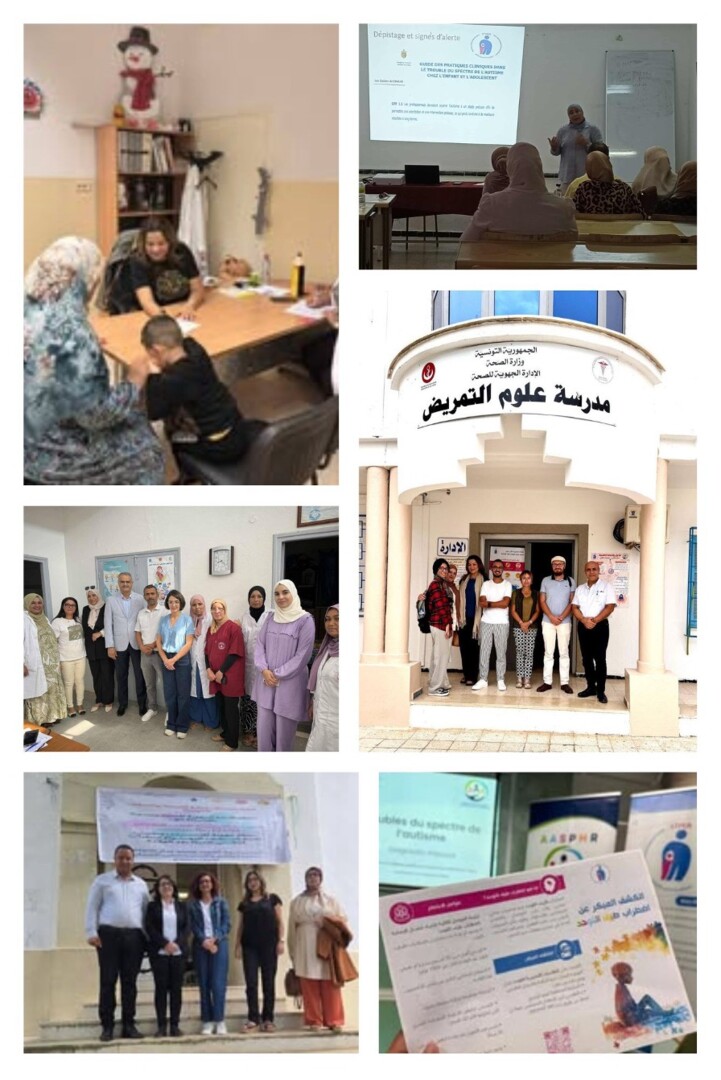
Figure 1: Mobile Outreach Caravans Organized by the Tunisian Society of Child and Adolescent Psychiatry in 2025, Regions of Aïn Draham, Kef, Enfidha, and Mednine (Tunisia)
A clinical evaluation was provided to 185 children under five. Based on the assessment and parental concerns, families received personalized guidance and referrals for psychiatric follow-up, speech therapy, or other specialized care. The key outcomes included the identification and referral of several suspected ASD cases to local child mental health services, as well as the detection of other neurodevelopmental disorders and academic difficulties. To empower families, psychoeducational sessions were conducted, focusing on recognizing early warning signs of ASD, implementing appropriate educational approaches, and navigating locally available resources.
The strategic decision to meet children and families in their own communities is a direct response to the obstacles that most often cause families to delay care: distance, cost, and a lack of local resources. By eliminating these barriers, this initiative secures a vital opportunity for early detection during the most critical neurodevelopmental window. This proactive approach is far more effective and cost-efficient, as it can mitigate the need for more intensive support later in life, ultimately leading to better developmental trajectories for the children served.
This initiative also confronts the deep-seated stigma that often surrounds child mental health in underserved communities, where challenges may be misunderstood or dismissed as behavioral issues. The very presence of mental health professionals serves to destigmatize care, normalize mental healthcare, spark public conversation and replacing misinformation with trusted, expert guidance.
In addition, these caravans will be regularly duplicated to ensure continuous outreach and support, further extending their impact and accessibility. Moreover, these initiatives will enable the implementation of telemedicine follow-up services in the near future for certain cases, providing ongoing remote monitoring and care, especially for families in remote or underserved areas.
This article represents the view of its author(s) and does not necessarily represent the view of the IACAPAP's bureau or executive committee.
