

Advancing Family-Based Practice in Children and Adolescents' Mental Health: Reflections from a Family Therapy Practicum
By: Ruziana Masiran1,2 ,Consultant Psychiatrist & Family Therapist
1Faculty of Medicine & Health Sciences, Universiti Putra Malaysia, 43400 Serdang, Selangor, Malaysia
2Hospital Sultan Abdul Aziz Shah, 43400 Serdang, Selangor, Malaysia
Across the Asia-Pacific region, professionals providing mental health care for children and adolescents are increasingly encountering complexity, as families present with layered mental health issues that often require sophisticated, multi-systemic interventions beyond standard individualised care models (Bobek et al., 2025). Stretched mental health service systems and contemporary societal shifts, including economic uncertainty, political polarisation, and intergenerational wealth inequality, have further intensified the prevalence of psychological distress across populations. In this context, family-based and systemic approaches are not optional enhancements, but key components of adequate mental health care. These frameworks recognise that individual well-being is inextricably linked to broader relational and societal dynamics, necessitating interventions that address the root causes of distress rather than merely treating symptoms (Beresin et al., 2024).
From August 2025 to January 2026, Malaysian mental healthcare practitioners participated in the Family Therapy Practicum 2025 (FTP2025), held at Hospital Sultan Abdul Aziz Shah, a Universiti Putra Malaysia (UPM) teaching hospital. The programme director and chairperson, Dr Ruziana Masiran, facilitated the practicum alongside trainer Mr Darrel Devan Lourdes, a family therapist from the Andolfi Family Therapy Centre. The hands-on training was conducted to strengthen family-focused clinical practice, nurture reflective practitioners, and build capacity in child and adolescent mental health. This article is a reflective account of the practicum, including its rationale, structure, learning processes, and observed impact, situated within IACAPAP's shared commitment to improving the mental health and developmental outcomes of children and adolescents through contextually responsive and collaborative care.
Why a Family Therapy Practicum?
Children and adolescents do not experience distress in isolation. Their emotional and behavioural worlds are shaped within families, schools, communities, and broader social systems. While this understanding is widely acknowledged, opportunities for structured training and supervision in family-based approaches remain uneven in Malaysia and across the region. Many clinicians working in the child and adolescent mental health services report limited access to sustained family therapy supervision, particularly supervision that integrates systemic thinking with the developmental and cultural sensitivities. FTP2025 was developed in response to this gap. Its primary aim was to support Malaysian psychiatrists and clinical psychologists in moving beyond individual-focused formulations and working more thoughtfully with families as key agents of recovery. At the same time, FTP2025 sought to create a learning community that transcended institutional and national boundaries, reflecting the region's collective strengths.
FTP2025 had the following practice-oriented objectives that aligned with IACAPAP's values:
- To strengthen clinicians' capacity to assess and intervene using a systemic perspective and family-based interventions in child and adolescent mental health.
- To enhance clinicians' reflective practice, ethical awareness, and sensitivity to developmental and cultural contexts.
- To foster regional connection and mutual learning among child and adolescent mental health professionals
Structure and Learning Process
Conducted over six months, the five-sessions, face-to-face practicum combined structured sessions with ongoing reflective engagement. The sessions were held on:
- 28 August 2025
- 25 September 2025
- 30 October 2025
- 18 December 2025
- 15 January 2026
There were eight Malaysian participants and one Indonesian participant who travelled from Jakarta to ensure full engagement throughout each of the practicum sessions.
The core elements of the practicum included live case presentations, facilitated systemic formulation, and reflective discussion. The first session, Thinking in Systems, invited participants to look beyond the individual child and attend to the patterns, relationships, and contexts shaping their experiences. In the second session, a four-step model was introduced as a flexible guide to support thoughtful assessment and intervention, helping participants remain grounded when working with complex family situations.
Subsequent session explored how unresolved pain can travel across generations, quietly influencing family relationships and parenting patterns. During the Intergenerational Trauma session, participants recognised the importance of moving from blame to compassion and healing.
In the fourth session, participants learned that attending to the couple’s relationship can create meaningful shifts that more effectively support the child's emotional world than child-focused work alone. The practicum concluded with a focus on 'the therapist's self', during which participants developed their own genograms drawn and reflected on how their assumptions, emotions, and positioning influence their clinical work. This process helped them cultivate greater awareness and presence when working with families
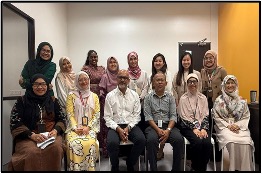
Figure 1: Participants of FTP2025 with the programme director, trainer, facilitators, and some of UPM's Master of Medicine (Psychiatry) students.
Standing (from left): Dr Ruziana, Ms Syamil Sofiah, Dr Kobbiganivaarani, Dr Azween Sharina, Dr Aliaa, Ms Cheryl, Ms Sim Teng, Dr Nurdalila Diyana.
Sitting (from left): Dr Suzy Yusnadewi, Prof. Dr Nik Ruzyanei, Mr Darrel, Assoc. Prof. Dr Hamidin, Assoc. Prof. Dr Wan Salwina, Assoc. Prof. Dr Rahima.
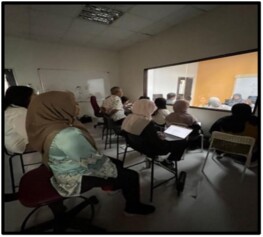
Figure 2: Attending practicum program
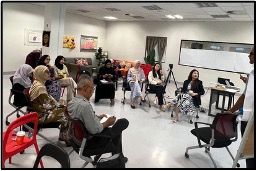
Figure 3: Attending practicum program
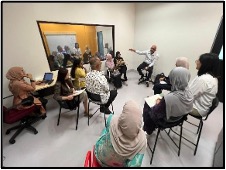
Figure 4: Attending practicum program
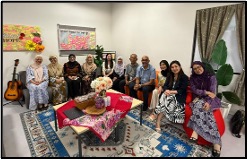
Figure 5: Picture of attendees
Regional Participation and Cross-Border Learning
A distinctive feature of the FTP2025 was its regional composition. Participants included child and adolescent mental health professionals from Malaysia and one from Indonesia. This cross-border participation enriched the learning environment in meaningful ways. Differences in service structures, cultural understandings of family roles, and approaches to child-rearing prompted reflective dialogue rather than comparison or hierarchy. Local participants noted that hearing how colleagues in Indonesia navigated family engagement and resource constraints deepened their appreciation of contextual adaptability and cultural humility.
Key Learning Themes
Several consistent learning themes emerged across the FTP2025. First, participants increasingly recognised that families are resources for change. Mental healthcare providers must therefore engage families as allies rather than as sources of difficulty. The practicum also supported clinicians in tolerating uncertainty, resisting premature conclusions, and remaining curious about the relational patterns. Participants reported greater clarity in linking children's symptoms to relational, developmental, and contextual factors. Work on the Self of the Therapist further emphasised that therapist assumptions, emotional responses, and cultural positioning as core clinical competencies.
Observed Outcomes and Lessons Learned
Participants described shifts in how they conceptualised and conducted their clinical work. Qualitative feedback suggested increased confidence in engaging families, greater flexibility in interventions, and an enhanced ability to work alongside families over time while attending to developmental trajectories and relational change. Nonetheless, the practicum was not without challenges. Differences in service expectations and training backgrounds also required ongoing negotiation and openness. The programme organiser recognised the importance of creating psychologically safe learning spaces, maintaining flexibility in programme design, and sustaining supervision and reflection as essential components of family-based child and adolescent mental health practice.
Conclusion
FTP2025 represents a meaningful contribution to advancing family-based practice in child and adolescent mental health in the region. Family-based systemic practice remains a vital foundation for effective child and adolescent mental health care. Sustained supervision, regional collaboration, and reflective learning spaces are essential to supporting clinicians and the families they serve.
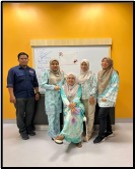
Figure 6: The organising committee members from Hospital Sultan Abdul Aziz Shah and the Faculty of Medicine & Health Sciences, Universiti Putra Malaysia.
From left (standing): Mr Roslan Yusoff, Mrs Norlindawati Mohd Nor, Mrs Noorsyahira Mohd Shukri and Miss Aishah Farhana Shahbudin. Sitting: Dr Ruziana Masiran.
Reflections from A Participant (Ms Syamil Sofiah Hussin):
The final session on the subject "Self of Therapist" was the hallmark of the programme, personally. Understanding that family therapy is an amalgamation of theory, tools, and the self has helped me stay grounded as a family therapist moving forward. In particular, I find that exploring the therapist's unfinished business, unmet needs, and the available resources in the concept of "Self" helps journey through the commonly feared process of growth. From the session, a personally important takeaway concerned Bowen's theory of differentiation of self. Based on the theory, I recognise that, as a therapist, I should aim to hold a higher "I position" than the client to facilitate the therapeutic process. However, if the therapist's "I position" is lower than the client's, family therapy may be found to be challenging and difficult to navigate. The concept was meaningful to me because I believe that being more mindful of my "I position" signifies my role as a fundamental instrument in therapy. I also learned that neutrality (or taking a neutral position) does not facilitate change; instead, change should happen through one's presence, taking emotional risks, and curiosity. Importantly, as a family therapist, one should not aim to become a healed therapist. Instead, by constantly working to empty the bucket, working with families without being emotionally captured may become a lighter task.
Acknowledgement
We would like to express our sincere appreciation to all participating psychiatrists, clinical psychologists, and medical officers for their active engagement and commitment throughout the five Family Therapy Practicum sessions.
We are especially grateful to the families who generously consented to participate in the live therapy sessions; their openness and trust made meaningful learning possible for everyone involved.
References
- Beresin, E.V., Guerrero, A.P.S., Morreale, M.K. et al. Addressing the Youth Mental Health Epidemic. Acad Psychiatry48, 217–221 (2024). https://doi.org/10.1007/s40596-024-01967-x
- Bobek, M., Hogue, A., Porter, N. et al. Core Practices in Systemic Family Therapy for Adolescent Behavior Problems: A Comprehensive Modular Pathway. Contemp Fam Ther47, 419–434 (2025). https://doi.org/10.1007/s10591-025-09738-y
This article represents the view of its author(s) and does not necessarily represent the view of the IACAPAP's bureau or executive committee.
